
Industrial Waste Heat Recovery Systems in Steel Manufacturing
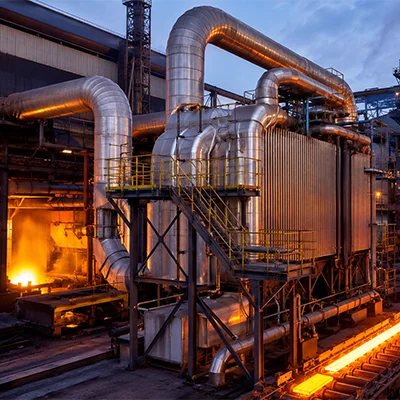
Steel production requires heat in nearly all aspects of the manufacturing process. Furnaces run around the clock, raw materials are smelted at high temperatures and hot-steel rolling mills work around the clock. A significant amount of heat is lost between these operations from equipment, exhaust systems, cooling sections, etc. For many years this loss of energy was taken for granted by many plants. Today, businesses are beginning to see that wasted heat isn't wasted heat at all.
The cost of energy keeps climbing and steel producers are under pressure to be more efficient and reduce emissions. Consequently, the industrial waste heat recovery has gained more significance throughout the steel industry. Plants are attempting to harness and reuse heat as much as possible rather than dissipating it into the air.
The recovered heat can be used for steam production, preheating operations, electricity generation etc. of the plant. Sometimes, full heat recovery results in significant savings over time, even when it is only part of the system. That is why more companies are investing in industrial waste heat recovery systems for steel plants as part of larger modernization efforts.
Heat Loss is a daily challenge at Steel Plants
Thermal energy is one key component in the production of steel. Excessive heat is produced in the ironmaking, reheating, sintering and rolling processes.
The problem is that a large percentage of this energy leaves the system unused.
Heat loss usually comes from:
- Furnace exhaust gases
- Hot steel surfaces
- Cooling systems
- Steam release
- Flue gases from coke ovens
- Electric arc furnace emissions
In older plants, practically none of this heat was utilized. Modern plants are now trying to reduce these losses because fuel and electricity costs continue increasing year after year.
Steel manufacturing energy recovery has become one way to improve efficiency without reducing production capacity.
More Steel Producers Are Thinking About Heat Recovery.
Energy represents a direct cost to steel-makers and contributes to those producers' profitability. A cost reduction of even just a fraction can add up to a substantial operating cost savings over time.
Waste heat recovery is no longer seen only as an environmental project. Many companies now treat it as part of routine plant optimization.
There are several reasons for this shift.
Lower Fuel Usage
Recovered heat can replace part of the fuel normally required for industrial heating operations.
Better Energy Management
Plants can make better use of energy already generated during production.
Reduced Operating Costs
The recovered heat reduces electric and fuel costs.
Environmental Benefits
Condensed fuel usage also links to less emissions from plants.
Improved Process Efficiency
Some recovery systems help furnaces maintain stable temperatures more efficiently.
Even modest advances in energy efficiency can lead to savings that accumulate over time, given the 24/7 operations of steel plants.
Waste Heat Boilers in Steel Manufacturing
The most common waste heat recovery system employed in steel plants is waste heat boiler.
These systems collect thermal energy from exhaust gases and use it to produce steam. The steam may then be used for several plant operations.
Typical uses include:
- Electricity generation
- Industrial heating
- Steam-driven equipment
- Internal utility systems
In integrated steel plants, waste heat boilers often support multiple departments at the same time.
Since blast furnaces and coke ovens release large amounts of hot gases every day, they provide steady opportunities for heat recovery.
Recuperators and Regenerative Systems
Recuperators are widely used in furnace operations. They're just supposed to move heat from the outgoing exhaust gases to the incoming combustion air.
Less fuel is required to achieve operating temperatures when the air is already heated on entering the furnace.
The principle behind regenerative burners is a little different. They temporarily store heat and utilize it in the next heating cycle.
Both technologies are considered useful high temperature heat recovery solutions because they improve thermal efficiency without major production changes.
Steel plants using recuperators and regenerative systems often report:
- Lower fuel use
- Better temperature control
- Improved furnace efficiency
- Reduced thermal losses
These systems are becoming common in facilities focusing on energy efficient waste heat recovery in steel manufacturing.
Electric Arc Furnace Heat Recovery
Electric arc furnaces are now widely used in scrap-based steel production. These furnaces generate intense heat during melting operations.
Large volumes of hot off-gases are produced during the process. Instead of allowing this energy to escape unused, plants can install recovery systems to capture it.
Recovered energy may support:
- Steam generation
- Power production
- Industrial heating
- Preheating applications
As electric arc furnace technology expands globally, interest in high temperature waste heat recovery technologies for steel mills is also increasing.
Some newer plants are combining heat recovery systems with automated monitoring tools to improve efficiency further.
Heat Recovery in Rolling Operations
Rolling mills also create opportunities for steel mill waste heat utilization.
During rolling and cooling, hot steel releases large amounts of thermal energy. While some heat naturally dissipates, part of it can still be recovered and reused.
Modern rolling mills are beginning to integrate industrial thermal energy recovery systems into cooling and exhaust sections to reduce unnecessary energy loss.
As important as blast furnaces are to energy recovery in the plant they do not provide as much energy recovery as rolling operations.
Digital Monitoring and Smart Controls
More digital solutions are being introduced in steel plants to better manage energy.
Newer heat recovery systems may also feature sensors and automated monitoring platforms that record the system's temperature, energy movement and equipment efficiency. These systems help operators:
- Detect heat losses quickly
- Improve furnace efficiency
- Reduce unnecessary fuel use
- Monitor equipment condition
- Improve energy balancing across departments
Artificial intelligence and predictive monitoring are also starting to influence steel plant heat recovery operations.
Instead of depending completely on manual adjustments, automated systems can respond faster to changing production conditions.
This helps recovery systems operate more efficiently throughout the production cycle.
The environmental benefits of waste heat recovery
Steel making is one of the most energy-demanding industries in the world. For many manufacturers, it is becoming gradually imperative to plan for energy efficiency. There are multiple benefits to industrial waste heat recovery, in the context of sustainability.
Lower Emissions
A reduced amount of fuel needed interprets to less greenhouse gases production.
Better Energy Efficiency
Plants use more of the energy already generated during operations.
Reduced Energy Waste
Thermal energy that would normally escape gets reused productively.
Support for Long-Term Sustainability Goals
Many steel producers now include heat recovery projects in broader environmental strategies.
As environmental regulations continue becoming stricter, recovery systems are becoming more common across modern steel facilities.
Challenges Steel Plants Still Face
Even though the advantages are clear, installing recovery systems is not always easy.
High Initial Costs
Large systems require investment in equipment, engineering, and installation.
Harsh Plant Conditions
Dust, vibration, and extremely high temperatures can affect equipment performance.
Complex Integration
Incorporating recovery equipment into the current production lines may need to be planned carefully.
Maintenance Needs
Regular checks and maintenance are required for high-temperature systems.
Changing Heat Loads
The recoverable heat varies with the level of production activity.
However, many manufacturers are investing in industrial waste heat recovery due to long-term savings which are typically greater than the upfront cost.
Future Direction of Heat Recovery in Steel Plants
The steel industry is still looking for more efficient ways of working. There are a number of trends that are likely to impact future recovery systems.
Thermal Storage Systems
Recovered heat may be stored and used later during periods of higher demand.
Advanced Materials
Heat exchangers and recovery equipment are becoming more durable in response to more demanding applications, with the aid of new materials.
AI-Based Optimization
AI is enhancing the ability of plants to control flow of thermal energy.
Cleaner Steelmaking Technologies
New recovery opportunities may arise in the future with new methods of steel making using hydrogen and electrification.
These developments suggest that heat recovery will continue becoming more important in steel manufacturing operations.
Conclusion
In steel making, the recovery of industrial waste heat is no longer considered as a second conversion. It is now a part of the normal operational planning process for numerous plants.
In the steel industry, unused thermal energy is generated on a large scale in the furnaces, exhaust gases and rolling processes. But more and more, manufacturers are searching for ways to recapture and use this heat.
Waste heat boilers, recuperators, regenerative burners and automated monitoring systems are all helping to enhance the efficiency of steel plants and to lower fuel consumption and emissions.
With the increasing energy price and the growing need for sustainability, waste heat recovery systems are increasingly becoming a key part of the steel production strategy for steel plants in the future.
 Media Pack Download
  Newsletters
  Industrial Events